
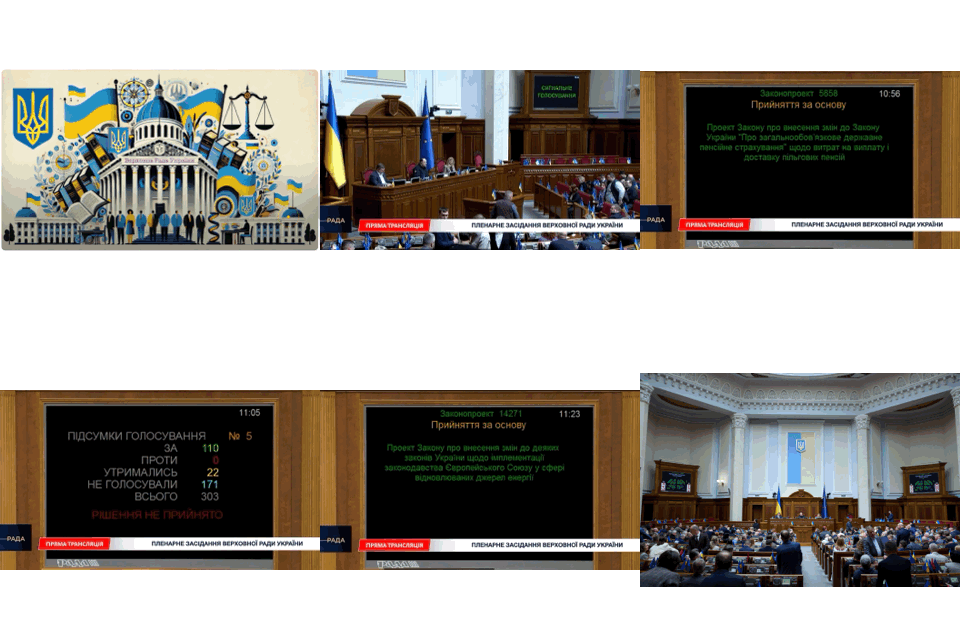
Цей парламентський день важливий не кількістю проголосованих актів, а їхньою якістю. У центрі — чотири напрями, які визначають післявоєнну архітектуру України: політика пам’яті, енергетична незалежність, якість державної служби та зрілість фінансового ринку.
Пам’ять як державна інфраструктура
Законопроєкт №14166 щодо Національного меморіального комплексу Героїв Небесної Сотні — це рішення не лише про будівництво. Це рішення про те, як держава закріплює політичну пам’ять у просторі столиці.
Парламент фактично усунув законодавчі колізії, які блокували реалізацію проєкту. У європейській логіці це означає: пам’ять про Революцію Гідності стає не символічним додатком до державної політики, а її інституційним елементом.
Енергетика як тест на європейську зрілість
Законопроєкт №14271 щодо відновлюваної енергетики є одним із найбільш показових євроінтеграційних рішень дня. Він стосується не лише сонячних чи вітрових електростанцій. Йдеться про зміну самої логіки енергетичного ринку.
Енергетичні спільноти, спрощені процедури, критерії сталості для біопалива, наближення до Директиви ЄС 2018/2001 — усе це створює основу для децентралізованої, стійкої та інвестиційно зрозумілої енергетики.
Державна служба: повернення конкурсу як умова довіри
Законопроєкт №13478-1 повертає відкриті конкурси на публічній службі та вводить пріоритет для ветеранів за умови рівної професійної компетентності. Це рішення має подвійне значення.
По-перше, воно завершує період кадрової надзвичайності, який був виправданий на початку повномасштабної війни, але не може залишатися постійною моделлю управління. По-друге, це пряма умова Ukraine Facility — тобто фінансової підтримки ЄС, прив’язаної до реформ.
У цій логіці Європейський Союз не просто фінансує Україну. Він допомагає відновити правила, без яких неможлива ефективна держава.
Факторинг: тиха, але важлива реформа ринку
Закон №12307 щодо факторингу виглядає технічним, але саме такі рішення часто формують реальну економічну інфраструктуру. Винесення факторингу в окреме спеціальне регулювання означає більшу правову визначеність для бізнесу, фінансових установ і кредиторів.
Для країни, яка одночасно воює, відновлюється і готується до вступу в ЄС, фінансові інструменти мають бути не декоративними, а працюючими.
Що об’єднує ці рішення
Усі чотири рішення мають спільний знаменник — державна спроможність. ЄС оцінює країну-кандидата не лише за політичними заявами, а за здатністю приймати, виконувати і контролювати правила.
Парламентський день 29 квітня показав, що Україна рухається до ЄС не одним коридором, а цілою системою паралельних реформ. Пам’ять, енергетика, державна служба і фінансові ринки — це різні сфери, але одна політична логіка.
Україна переходить від євроінтеграційних декларацій до євроінтеграційної інженерії держави.
A parliamentary day that revealed Ukraine’s new logic: memory, energy, public service and financial markets
On 29 April, the Verkhovna Rada of Ukraine adopted a set of decisions that may look unrelated at first glance. Yet in the political logic of the European Union, they form a single picture: Ukraine is not merely adapting individual laws. It is gradually rebuilding the state according to European rules.
This parliamentary day matters not because of the number of adopted acts, but because of their quality. Four areas were at the centre: public memory, energy independence, the quality of public administration and the maturity of financial markets.
Memory as state infrastructure
Draft Law No. 14166 on the National Memorial Complex of the Heavenly Hundred Heroes is not only about construction. It is about how the state anchors political memory in the capital’s public space.
Parliament effectively removed legislative collisions that had blocked the project. In European terms, the memory of the Revolution of Dignity becomes not a symbolic appendix to state policy, but an institutional element of it.
Energy as a test of European maturity
Draft Law No. 14271 on renewable energy is one of the most telling European integration decisions of the day. It is not only about solar or wind power plants. It is about changing the logic of the energy market itself.
Energy communities, simplified procedures, sustainability criteria for biofuels and approximation to EU Directive 2018/2001 create the basis for decentralised, resilient and investment-friendly energy.
Public service: restoring competition as a condition of trust
Draft Law No. 13478-1 restores open competitions in public service and introduces priority for veterans where professional competence is equal. This decision has a dual meaning.
First, it ends the period of wartime кадрова emergency that was justified at the beginning of the full-scale invasion but cannot remain a permanent model of governance. Second, it is a direct condition of the Ukraine Facility — EU financial support tied to reforms.
Factoring: a quiet but important market reform
Law No. 12307 on factoring may look technical, but such decisions often shape real economic infrastructure. Moving factoring into specialised regulation means greater legal certainty for businesses, financial institutions and creditors.
What unites these decisions
All four decisions share one denominator: state capacity. The EU assesses a candidate country not only by political statements, but by its ability to adopt, implement and enforce rules.
The parliamentary day of 29 April showed that Ukraine is moving towards the EU not through one corridor, but through a system of parallel reforms. Memory, energy, public service and financial markets are different areas, but one political logic.
Ukraine is moving from European integration declarations to the European integration engineering of the state.