

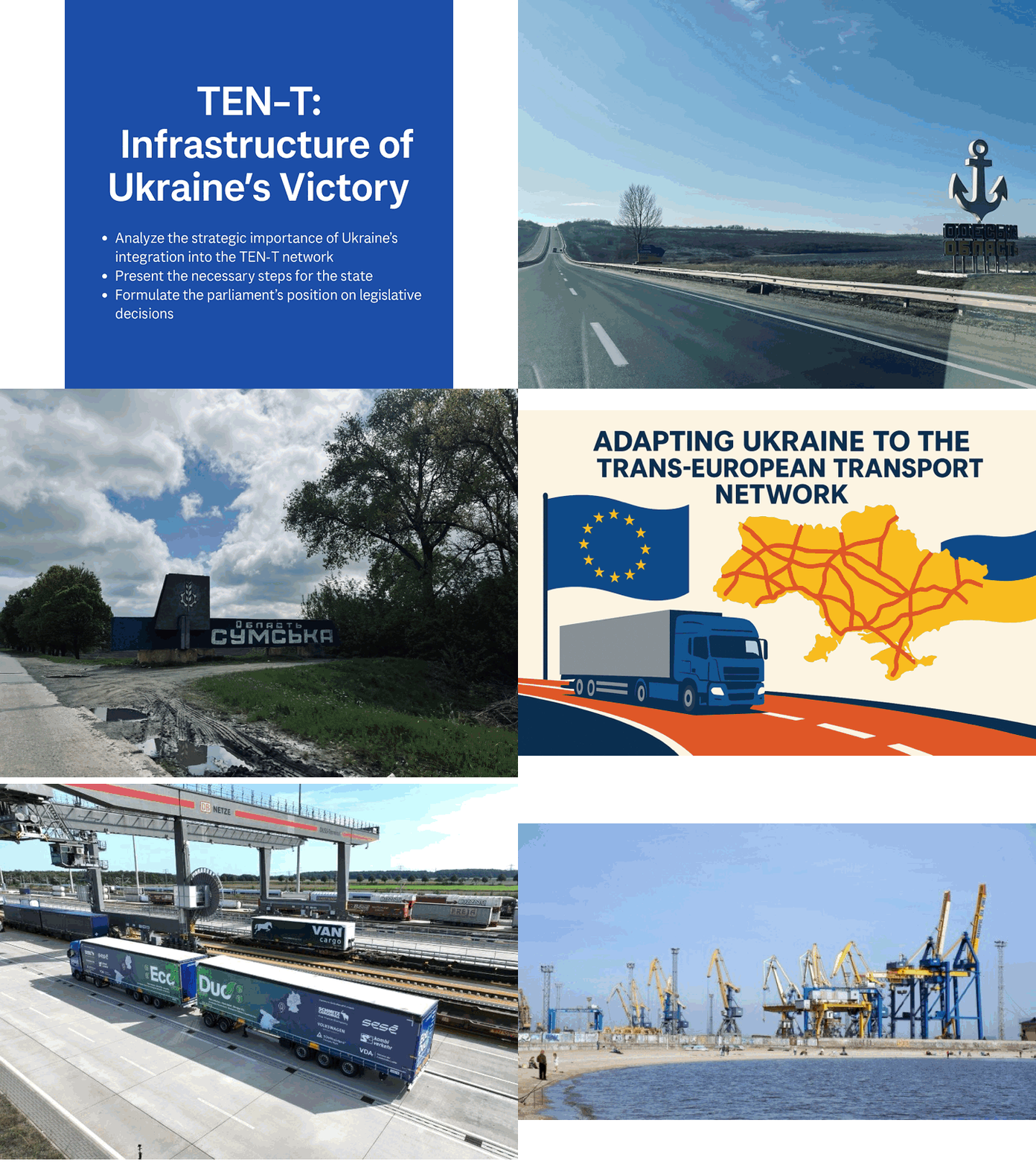
As Ukraine continues its struggle for freedom and independence, infrastructure has become more than a matter of convenience — it has turned into a battlefield of logistics, mobility, resilience and strategic depth. In this context, the Trans-European Transport Network (TEN-T) is emerging as a vital foundation for Ukraine’s defense capabilities, recovery potential and integration into the European Union.
For Ukraine, joining TEN-T is not just about connecting roads or railways. It is a matter of national security, economic revitalization, and geopolitical alignment with the European community. The integration into TEN-T is our path to stability and victory.
What is TEN-T and why is it crucial for Ukraine ?
TEN-T (Trans-European Transport Network) is the EU’s strategic transport network, connecting member states and neighboring countries via:
• highways and railways,
• seaports and inland terminals,
• airports,
• multimodal logistics hubs.
TEN-T is being developed in three layers:
• Core Network – by 2030,
• Extended Core – by 2040,
• Comprehensive Network – by 2050.
It aims to facilitate the smooth movement of goods, people, and military logistics across Europe through modern, sustainable and digital infrastructure.
Ukraine has already been integrated into several key corridors:
• the Baltic–Black Sea Corridor (Gdynia – Lviv – Kyiv – Odesa),
• the Carpathian Corridor (Budapest – Chop – Lviv),
• the Southern Route (Constanța – Chișinău – Odesa – Mykolaiv),
• and the potential extension Krakow – Lviv – Dnipro.
TEN-T in wartime: from transportation to military mobility
Following the full-scale Russian invasion, the EU has launched the Military Mobility Action Plan 2.0 (2022–2026), embedding defense objectives into TEN-T. The updated framework supports:
• the rapid deployment of heavy military equipment,
• modernization of bridges, roads, and terminals to handle defense loads,
• synchronized logistics for weapon and humanitarian supplies,
• digital traffic coordination (ERTMS and ITS systems).
In today’s reality, TEN-T is not only a peace-time network. It is a core infrastructure of collective European defense. Ukraine’s active participation in this system is vital for our operational resilience and coordination with NATO and EU allies.
Strategic Corridors for Ukraine: What Matters Most ?
1. Baltic–Black Sea Corridor: critical for military, humanitarian and commercial traffic between Polish ports and southern Ukraine.
2. Carpathian Corridor: direct link with Central Europe (Hungary, Slovakia, Austria) for evacuation, logistics and energy supplies.
3. Southern Corridor: alternative maritime access via Constanța and Danube ports if Black Sea routes are blocked.
4. Krakow–Lviv–Dnipro Axis: a future strategic east–west route supporting reconstruction and deep EU integration.
Benefits for Ukrainian citizens and local communities
TEN-T will:
• modernize rail and road infrastructure,
• create thousands of new jobs in logistics and construction,
• provide safe, high-speed passenger mobility,
• support green transport (EV and hydrogen stations every 60–200 km),
• connect regions to EU trade and economic zones,
• ensure fast delivery of humanitarian aid and medical supplies.
For frontline and border communities, it means access to resources, connectivity with EU neighbors, and increased resilience.
What must Ukraine do now ?
1. Appoint National TEN-T Corridor Coordinators
Each corridor in the EU is supervised by a designated European Coordinator. Ukraine must replicate this model by assigning national coordinators to:
• represent Ukraine at the Core Network Corridor Forums,
• manage regional implementation,
• coordinate military, civil and donor cooperation.
2. Establish a National TEN-T Agency
This body will:
• manage project implementation and documentation,
• liaise with the EU, donors and IFIs (e.g., CEF, European Defence Fund),
• ensure efficient use of funds,
• synchronize civilian and military infrastructure needs.
3. Harmonize technical and military standards
• upgrade roads, bridges and tunnels for dual-use mobility,
• implement ERTMS and digital transport systems,
• align national norms with NATO and EU defense logistics requirements.
TEN-T as part of Ukraine’s national security doctrine
Ukraine should embed TEN-T infrastructure into its National Security Strategy, ensuring:
• prioritized funding for dual-use infrastructure,
• integration with the General Staff’s military logistics planning,
• development of regional transport resilience clusters,
• secure evacuation and humanitarian corridors.
Conclusion: Infrastructure is Strategy
Ukraine’s inclusion in TEN-T is not symbolic — it is essential. We must:
• institutionalize participation,
• actively contribute to European transport governance,
• mobilize resources to upgrade infrastructure now.
🇺🇦🛣️🇪🇺TEN-T is the strategic foundation of Ukraine’s victory and postwar recovery. It connects us not only to Europe’s markets — but to Europe’s values and collective strength.
Yuriy Koryavchenkov, Member of the Verkhovna Rada of Ukraine