🇺🇦 Government Q&A Hour: Economy, Energy, Agricultural Policy, and Trust Between the State and Business
The Government Q&A Hour took place in the Verkhovna Rada of Ukraine — an open dialogue format between the government and parliament that remains a vital tool of accountability even during wartime.
Today’s session focused on key areas forming the foundation of Ukraine’s post-war recovery: energy security, industrial support, agricultural resilience, humanitarian demining, corporate governance, cooperation with the United States, and reform of business oversight.
🔹 Energy and National Resilience
The Prime Minister opened the discussion with a report on the consequences of the overnight Russian attack on energy infrastructure.
Repair teams started restoration work immediately after the air-raid alert ended. In Kyiv, critical infrastructure has already been restored, and full water supply recovery is expected within hours.
MPs raised questions about the air defence systems protecting energy facilities.
The government emphasized that Air Force Command is responsible for air defence, and the main challenge is the shortage of resources to cover all strategic sites.
Efforts to expand capabilities continue in partnership with international allies.
🔹 “Made in Ukraine” Program: Results and Prospects
Minister of Economy, Environment, and Agriculture Oleksii Soboliev reported on the achievements of the “Made in Ukraine” program.
In 2025, over ₴35 billion was allocated, contributing to a 0.6% GDP increase and generating 17% of budget revenues from the manufacturing sector.
“These programs work — they stimulate production localisation, technical modernisation, affordable lending, and insurance for non-raw-material exports,” the minister stressed.
🔹 CBAM: Preparing for the EU’s New Environmental Rules
Among the challenges for Ukrainian businesses is the scheduled 2026 implementation of the Carbon Border Adjustment Mechanism (CBAM).
Ukraine has already submitted a force majeure letter to the European Commission to defer the mechanism’s application for Ukrainian exporters.
Consultations in Brussels are expected in the coming weeks.
🔹 Humanitarian Demining: Lower Costs, Higher Efficiency
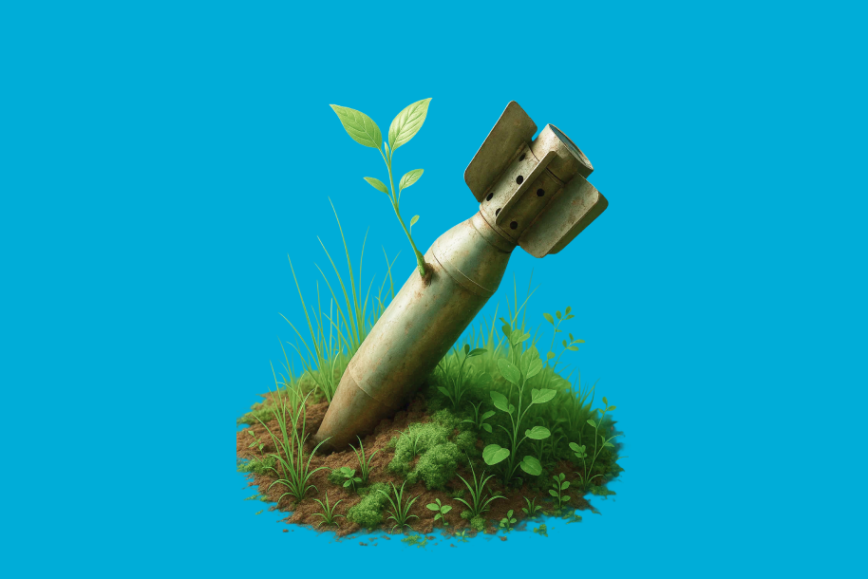
Parliament paid special attention to humanitarian demining of agricultural land.
Of the ₴3 billion allocated for demining, only ₴300 million has been used due to a significant drop in the cost of clearing 1 hectare through transparent ProZorro auctions.
The average cost is now ₴57,000 (~$1,400), several times lower than initial forecasts.
“Competition and an open operator market have reduced costs. A new decree is being prepared to expand demining to additional land, including about 800,000 hectares of forest,” the minister said.
Ukraine is also preparing its position for the upcoming International Demining Conference in Japan, aiming to attract new donor funding.
🔹 Reconstruction, Investment, and U.S. Cooperation
The minister announced the creation of a Recovery and Strategic Minerals Partnership Fund jointly with the United States.
Following a U.S. delegation visit, the DFC increased its contribution to the fund from $25 million to $75 million.
“By year-end, the fund’s bank accounts will be opened, an administrator and investment advisor appointed, and in December, applications from Ukrainian companies will be accepted,” Soboliev reported.
This fund will serve as a catalyst for investment in the extraction and processing industries, particularly in strategic minerals.
🔹 Agricultural Policy: Farmer Support and Irrigation Reform
Topics of special attention included the drought in southern Ukraine and the difficult situation of farmers.
The minister confirmed that the government approved ₴5,000 payments per farmer and is preparing a comprehensive irrigation system reform.
“We resolved bureaucratic conflicts between ministries, provided funding to Mykolaiv region, and are working with the EBRD and AIFD on long-term irrigation financing programs,” the minister noted.
🔹 Environmental Modernisation of Metallurgy
Responding to questions about continuing the operation of open-hearth furnaces in Zaporizhzhia, the government stated that enterprises must comply with EU environmental standards.
Ukraine will attract Ukraine Investment Framework funding to modernise facilities and reduce industrial emissions.
“We must meet European standards, upgrade monitoring laboratories, and support industrial modernisation through EU financial mechanisms,” Soboliev emphasised.
🔹 Corporate Governance Reform
The government is working with the EBRD and Ministry of Energy to reform the corporate governance of state-owned enterprises.
The Energoatom charter has already been updated in line with European partners.
“The reform will be gradual. We are improving supervisory board selection and systematically updating state company charters to align with European practices,” the minister said.
🔹 Moratorium on Inspections: A New Control Model
The final block focused on state oversight of business.
MPs recalled that the government had promised a moratorium on inspections, yet the number of investigative actions and checks has increased.
The minister explained that the moratorium is in effect, but only partially:
“The number of inspections has decreased tenfold — from 200,000 to 25,000 per year. Checks are conducted only in areas critical to public safety — utilities, pharmaceuticals, education, and media.”
The government is preparing a transition to a risk-based oversight model.
Bill No. 1403 “On the Fundamentals of State Supervision and Control”, adopted in the first reading this week, aims to inspect only high-risk enterprises, reducing pressure on small and medium-sized businesses.
“All business associations support the law. This is a step towards a civilised model of state-business interaction,” the minister stressed.
🟢 Conclusion
Today’s Government Q&A Hour demonstrated that even during wartime, parliament and government maintain an open dialogue format, focusing on energy, economy, transparency, and trust.
Ukraine proves that the path to the EU is not only about production standards but also about a new level of governance, openness, and partnership between the state and society.
#VerkhovnaRada #GovernmentQA #OleksiiSoboliev #MadeInUkraine #CBAM #Demining #Agriculture #Irrigation #DFC #UkraineInvestmentFramework #EBRD #InspectionMoratorium #Business #ndu_ua