
Verkhovna Rada of Ukraine • Plenary sitting • 15 July 2026
The Verkhovna Rada adopted Bill No. 14067 on the development of efficient and sustainable district heating and Resolution No. 15338 condemning Russia’s systematic destruction of Ukrainian cultural heritage. However, Bill No. 14191 on support for families of persons with disabilities was returned for a repeat second reading, while Draft Resolution No. 15391 on maintaining the sporting isolation of Russia and Belarus failed to secure the required 226 votes.
KEY RESULTS OF THE PLENARY SITTING
Bill No. 14067 — 243 votes. Legislation supporting efficient and sustainable district heating was adopted at second reading and in full.
Bill No. 14191 — 163 votes. The disability support bill failed to pass in full and was subsequently returned for a repeat second reading by 283 votes.
Resolution No. 15338 — 252 votes. Parliament adopted an international appeal condemning Russia’s policy of systematic cultural destruction against the Ukrainian people.
Draft Resolution No. 15391 — 210 votes. An appeal seeking the continued exclusion of Russian and Belarusian athletes from international competitions failed to obtain sufficient support.
Draft Resolution No. 15018-15. A procedural proposal to amend the agenda of Parliament’s fifteenth session was registered.
Following the politically significant sitting of 14 July, when Parliament accepted the Prime Minister’s resignation and extended martial law and general mobilisation, the Verkhovna Rada returned to sector-specific legislation and international resolutions.
The decisions taken on 15 July concern the daily functioning of Ukrainian communities: the reliability of urban heating systems, social support for families, protection of cultural heritage and the international isolation of the aggressor state.
The voting record also revealed a recurring parliamentary problem. Some initiatives failed not because they faced substantial opposition, but because a significant number of MPs abstained or did not vote.
Bill No. 14067: district heating legislation adopted
The Verkhovna Rada adopted Bill No. 14067 at second reading and in full. The legislation amends several Ukrainian laws to support the development of efficient and sustainable centralised, or district, heating systems.
Voting result:
In favour — 243.
Against — 0.
Abstained — 49.
Did not vote — 36.
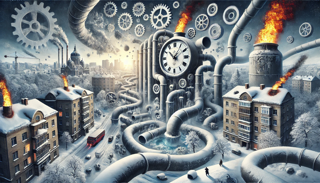
District heating is among the most vulnerable parts of Ukraine’s municipal infrastructure. Ageing networks, substantial heat losses, limited investment and the financial instability of municipal utility companies were serious problems even before Russia’s full-scale invasion.
Russian attacks on energy infrastructure have added a direct security dimension. A heating network is no longer merely a municipal service: during winter it is an essential element of civilian protection, the operation of hospitals and schools, and the ability of residents to remain in their communities.
The stated purpose of the legislation is to support efficient and sustainable heating. Its practical value, however, will depend on the final wording of the law, the availability of financing and the quality of its implementation at national and municipal levels.
Issues requiring further parliamentary and public scrutiny:
• sources of financing for the modernisation of heating networks and generation facilities;
• the division of responsibilities between the state, municipalities and utility companies;
• consumer protection and safeguards against unjustified transfers of costs to households;
• measurable reductions in heat and energy losses;
• the resilience of heating systems to military attacks, emergencies and technical failures.
For Ukraine’s European integration, the significance of the law will be measured not by formal legislative alignment alone. Implementation should reflect European principles of energy efficiency, transparent municipal governance, consumer protection, long-term investment planning and measurable performance.
Bill No. 14191: disability support legislation returned for revision
Bill No. 14191 proposes amendments to Ukraine’s legislation on state social assistance for persons with disabilities from childhood and children with disabilities. Its declared purpose is to establish a more comprehensive system of state support and strengthen social guarantees for affected families.
Only 163 MPs supported the bill at second reading and in full. One MP voted against, 47 abstained and 92 did not vote. The proposal therefore failed to reach the required threshold of 226 votes.
Parliament subsequently voted by 283 votes to return the bill for a repeat second reading. A proposal to shorten the period for its renewed preparation was supported by 236 MPs.
Legislative status: Bill No. 14191 has not been adopted and cannot be applied as law. It has not, however, been finally rejected. The responsible parliamentary committee must revise the text and prepare it for another second-reading debate.
The vote indicates that there was no agreed parliamentary position on the proposed model of support. There was almost no direct opposition to the bill — only one MP voted against it — yet 139 MPs either abstained or did not vote.
The repeat second reading should clarify who will qualify for assistance, how payments will be calculated, how the programme will be financed and how cash benefits will relate to social services, rehabilitation, inclusive education and support for family members providing continuous care.
For European observers, the bill is relevant to Ukraine’s implementation of disability rights and social inclusion standards. Its future assessment should therefore examine not only the level of financial assistance, but also accessibility, non-discrimination, independent living and the availability of community-based services.
Resolution No. 15338: international appeal on Russia’s cultural destruction
The Verkhovna Rada adopted Resolution No. 15338 by 252 votes. The resolution addresses the United Nations, national parliaments and governments, EU and NATO member states, the European Parliament, UNESCO and the parliamentary assemblies of the Council of Europe, the OSCE and NATO.
The document calls on the international community to condemn what the Ukrainian Parliament describes as the Russian Federation’s policy of systematic cultural genocide against the Ukrainian people.
Russia’s aggression involves more than the physical destruction of cultural institutions. Ukrainian authorities have documented the removal of museum collections, destruction of archives, persecution of cultural workers, Russification of occupied territories and the suppression of Ukrainian language, education and historical identity.
The resolution does not automatically create a new international sanctions mechanism or legal classification. Its significance lies in documenting the systematic nature of Russia’s conduct and mobilising international support for the protection of Ukrainian cultural heritage.
Practical follow-up should include:
• documenting destroyed, damaged and unlawfully removed cultural property;
• preparing evidence for international judicial and compensation mechanisms;
• strengthening sanctions against individuals and institutions involved in cultural crimes;
• mobilising international resources for the preservation and reconstruction of Ukrainian cultural heritage.
Draft Resolution No. 15391: appeal on the sporting isolation of Russia falls short
Draft Resolution No. 15391 proposed an appeal to the International Olympic Committee and international sports federations. It called for Russian and Belarusian athletes to remain excluded from international competitions until Russia’s armed aggression against Ukraine has ended.
The inclusion of the draft resolution on the parliamentary agenda was supported by 246 MPs. A shortened procedure for its consideration was approved by 186 MPs.
However, the subsequent indicative vote produced only 210 votes. No MP voted against or abstained, while 70 did not vote. The proposal therefore failed to secure the required parliamentary majority.
A parliamentary paradox: not a single MP voted against the appeal, yet it still failed to obtain the required 226 votes. Non-participation in the vote effectively blocked the initiative in the absence of open political opposition.
For Ukraine, the participation of Russian and Belarusian athletes in international competitions is not regarded as a purely sporting matter. The Russian state uses athletes, national symbols and major sporting events as instruments of political legitimacy and international propaganda.
The failure of the resolution weakens the specific parliamentary appeal, but it does not prevent Ukraine’s government, sports federations and diplomatic representatives from continuing their engagement with international sporting bodies.
Draft Resolution No. 15018-15: proposed changes to the parliamentary agenda
On 15 July, Draft Resolution No. 15018-15 was registered to amend the agenda of the fifteenth session of the ninth convocation of the Verkhovna Rada.
This is a procedural proposal governing the organisation of future parliamentary work. Registration does not mean that the resolution has been adopted or that every proposed item has been added to the timetable of plenary sittings.
The regional perspective: what the decisions mean for Kryvyi Rih
For Kryvyi Rih, Bill No. 14067 has the most immediate practical significance. The city has an extensive network of municipal infrastructure, a large stock of multi-apartment housing, substantial industrial demand and continuing exposure to Russian attacks.
The city therefore needs more than repairs to individual sections of its heating network. It requires a long-term modernisation model integrating lower energy losses, decentralised and backup generation, protection of critical facilities and predictable investment.
The success of the legislation should be measured through reductions in emergency failures and heat losses, the availability of reserve energy sources and the ability of local systems to continue operating when primary infrastructure is damaged.
Regional expert comment
“Parliamentary work is measured not only by the number of draft laws adopted, but also by whether communities, enterprises and people on the ground will actually feel the impact of these decisions. Long-term financing, transparent rules and the modernisation of strategic infrastructure must work not in theory, but in the real economy of Ukraine’s regions.”
Ruslan Shamrin — Member of Kryvyi Rih City Council and member of the Standing Committee on the Implementation of the City Development Strategy and Investment.
Bill No. 14191 also has a direct regional dimension. Families caring for children or adults with disabilities need more than cash payments. They require accessible social services, rehabilitation, inclusive education, transport and support for family members who provide continuous care.
Returning the bill for a repeat second reading provides an opportunity to address its deficiencies. Parliament must nevertheless ensure that renewed preparation does not become an indefinite postponement of support.
The central parliamentary risk: non-participation rather than opposition
The votes of 15 July illustrate an important problem in parliamentary decision-making. Bill No. 14191 received only one vote against, while Draft Resolution No. 15391 received none. Yet neither document was adopted in the form presented.
In the vote on Bill No. 14191, 139 MPs either abstained or did not vote. During the indicative vote on Draft Resolution No. 15391, 70 MPs did not vote. Formally, non-participation is not a vote against a proposal. In practical terms, however, it may produce the same result — the absence of a parliamentary decision.
For citizens and international partners, it is therefore important to consider the complete voting record, not merely the number of votes in favour. The full record reveals whether a proposal faces substantive political opposition or whether Parliament has failed to mobilise sufficient participation.
What should happen after the votes
Bill No. 14067. The final text should be published and followed by clear financial and institutional arrangements explaining how municipalities will implement the legislation.
Bill No. 14191. The responsible committee should address the reasons for the bill’s failure and present a financially sustainable, rights-based model of comprehensive family support.
Resolution No. 15338. The parliamentary appeal should be followed by systematic international work on documentation, accountability and the protection of cultural heritage.
Draft Resolution No. 15391. Its sponsors should determine the next parliamentary step and continue international advocacy against the use of sport to legitimise the aggressor state.
The plenary sitting of 15 July did not produce a large volume of adopted legislation. It did, however, demonstrate how parliamentary decisions affect municipal infrastructure, social protection and Ukraine’s international response to Russian aggression.
The adoption of Bill No. 14067 establishes a legislative basis for changes in district heating, but the outcome will depend on financing and local implementation. Returning Bill No. 14191 for a repeat second reading preserves the possibility of improving support for families, while delaying its practical introduction.
The quality of parliamentary work is not determined by the adoption of a document alone. It depends on whether legislation contains an implementable mechanism, is supported by adequate resources and produces measurable improvements in the lives of people and communities.