War as an Environmental Challenge: Time for Systematic Action
The full-scale war has brought Ukraine not only humanitarian and economic losses but also unprecedented environmental damage. Water pollution, deforestation, soil mineralization, the destruction of protected areas—all of this already has systemic consequences for public health, the economy, and the country’s environmental resilience.
In such conditions, the state must have a clear, reliable, and internationally recognized methodology for assessing environmental damage, particularly for preparing claims against the aggressor, shaping recovery policies, and implementing the "polluter pays" principle.
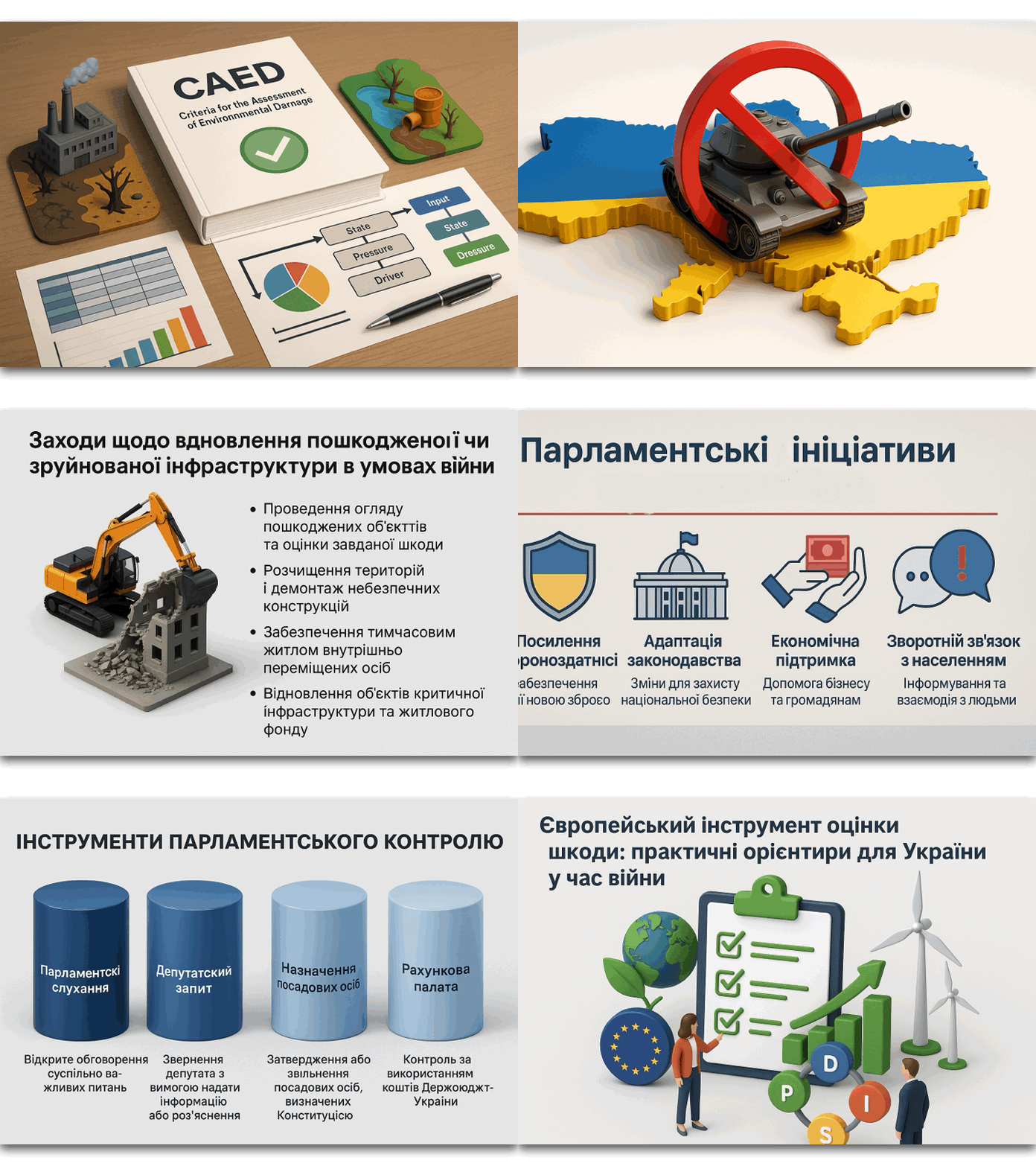
Therefore, I support and initiate the implementation of the European CAED methodology—Criteria for the Assessment of Environmental Damage, developed by the IMPEL network in close cooperation with the European Commission.
What is CAED and How Does It Work
The CAED project is the result of five years of work by over 30 experts from EU countries, aimed at developing a unified procedure for detecting and documenting environmental damage in accordance with Directive 2004/35/EC on environmental liability (ELD).
Within CAED:
• A Practical Guide, indicator tables, checklists, and decision-making flowcharts have been developed;
• The DPSIR/ISPD model is applied to identify cause-effect relationships between actions, damage, and environmental conditions;
• The methodology has been tested on 32 real cases from 19 EU countries;
• An e-learning platform and a series of training sessions for government bodies and communities have been created.
The entire methodology is based on three key stages:
- Screening—identifying potential damage (checking if the case falls under the ELD);
- Clues—detecting signs of damage (based on indicators and short-term data);
- Evidence—confirming proof of damage (through assessing long-term impacts, ecosystem condition changes, and legal documentation).
Example from Kherson Region: Destruction of the Kakhovka HPP
One of the most striking examples where CAED can be applied today is the destruction of the Kakhovka Hydroelectric Power Plant.
• Loss of water balance in the lower Dnipro;
• Destruction of fish spawning grounds and freshwater ecosystems;
• Soil flooding and loss of arable land;
• Water contamination with heavy metals.
Applying the ISPD model, we obtain the full chain:
Driver (military intervention) → Pressure (dam breach) → State (disruption of the hydrological regime) → Impact (loss of biodiversity, soil degradation) → Response (need for compensation and recovery).
CAED allows these changes to be scientifically substantiated and recognized under international law.
Sumy Region: Border Ecosystems Under Shelling
In Sumy region, large areas have been subjected to constant artillery shelling, leading to:
• Soil contamination with heavy metals;
• Disruption of natural waterways;
• Destruction of protected areas.
In these cases, CAED applies specific indicator tables that allow:
• Rapid screening of the site;
• Detection of signs of biodiversity damage;
• Justification for long-term environmental studies and the perpetrators’ obligations for restoration.
Zaporizhzhia Region: Industrial Damage and Environmental Threats from ZNPP
CAED has a special role in Zaporizhzhia region, where:
• Environmental risks arise from military actions around the Zaporizhzhia Nuclear Power Plant (ZNPP);
• Industrial infrastructure (metallurgy, chemical plants) has been damaged;
• Waste treatment facilities and water intakes are disrupted.
Here CAED enables:
• Assessment of potential environmental pollution risks in case of accidents;
• Differentiation of war-related damage from chronic industrial degradation;
• Formation of legally sound dossiers based on EU standards.
Ukrainian Initiative: How I Propose to Implement CAED
As a Member of Parliament, I initiate:
- Adapting CAED to Ukrainian legislation through a draft law that considers the principles of Directive 2004/35/EC;
- Piloting CAED in three regions: Kherson, Sumy, and Zaporizhzhia, involving state environmental inspectorates, NGOs, and experts;
- Integrating CAED into digital environmental monitoring platforms (including EcoThreat, the Unified Damage Assessment Platform);
- Conducting an extensive communication campaign to train inspectors, officials, prosecutors, volunteers, and community representatives.
CAED: A Chance for Ukraine
Today, as we bear not only losses but also the responsibility for rebuilding the country, integrating CAED into the environmental policy system is a step towards justice, objectivity, and international support.
This tool allows:
• Avoiding subjective assessments;
• Quickly responding to threats;
• Preparing high-quality claims;
• Forming an environmental evidence base for courts and tribunals;
• Ensuring real compensation for community losses.
I invite you to discuss, comment, share, and send your suggestions—together, we can create a system that protects Ukraine's environment even in the most challenging times.