

As Ukraine approaches the fourth anniversary of Russia’s full-scale invasion, the country enters a new strategic phase. The emergency mobilisation of 2022 and the stabilisation period of 2023–2024 have evolved into a stage defined by institutional resilience, structural reform, and long-term state sustainability under wartime conditions.
In 2026, the central question for international partners is no longer whether Ukraine can withstand aggression. The question is whether Ukraine can simultaneously:
• sustain national defence,
• rebuild critical infrastructure,
• protect civil and social rights,
• maintain fiscal discipline and transparency, and
• continue its EU accession process.
This analysis examines Ukraine’s institutional capacity as a multiplier of national and European security.
I. The Security Environment in 2026: A Multi-Dimensional Challenge
1.1 From Battlefield Shock to Structural Pressure
Four years into full-scale war, Ukraine continues to face:
• risks of renewed attacks on energy infrastructure;
• pressure on logistics and export corridors;
• cyber and hybrid operations;
• coordinated disinformation campaigns aimed at weakening public trust and international solidarity.
The conflict has evolved from a primarily kinetic confrontation to a hybrid contest involving infrastructure resilience, institutional credibility, and information security.
1.2 Institutional Continuity as Strategic Deterrence
Ukraine’s ability to maintain parliamentary sessions, pass budgets, coordinate local governance, and implement reforms during wartime sends a clear signal:
the state remains governable, predictable, and aligned with European standards.
Institutional continuity itself functions as a deterrent.
II. Energy Security: Reconstruction Under Persistent Threat
2.1 From Emergency Repair to Systemic Modernisation
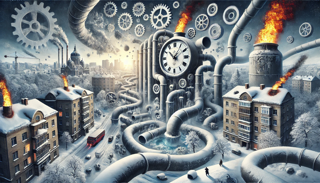
After sustained missile and drone attacks targeting power plants and transmission networks, Ukraine’s energy policy has shifted from reactive repair to structural transformation.
Key developments include:
• decentralised and distributed generation systems;
• enhanced physical protection of critical facilities;
• synchronisation with the European electricity grid;
• integration of renewable capacity within a broader “Green Recovery” framework.
Energy resilience is no longer solely about preventing blackouts. It is about long-term alignment with the European energy architecture.
2.2 European Implications
Ukraine’s energy stability directly affects:
• regional grid reliability;
• energy diversification strategies in Eastern Europe;
• the EU’s broader energy security agenda.
In 2026, Ukraine is not merely a recipient of support — it is a component of Europe’s energy resilience.
III. Critical Infrastructure and Logistics: Economic Security in Practice
3.1 Reconfiguration Under War Conditions
The destruction of bridges, rail hubs, and port facilities forced Ukraine to redesign its logistics system.
Strategic priorities in 2026 include:
• restoration of transport corridors vital for domestic and international trade;
• interoperability between Ukrainian and EU rail networks;
• expansion and modernisation of border infrastructure;
• enhanced protection of export routes critical for global food security.
Infrastructure resilience is directly linked to macroeconomic stability and employment.
3.2 Investor Confidence and Fiscal Stability
Reconstruction planning, procurement transparency, and donor coordination play a decisive role in maintaining:
• international financial assistance;
• foreign direct investment interest;
• budget predictability under wartime conditions.
Economic resilience reinforces national security.
IV. Social Stability and Protection of Rights
4.1 The Structural Social Impact of War
Four years of war have reshaped Ukraine’s demographic and social landscape:
• a growing veteran population;
• long-term rehabilitation and reintegration needs;
• internally displaced communities requiring sustainable housing solutions;
• families of detained or missing citizens.
Institutional strength is measured not only by military capability but by the protection of civil and social rights under martial conditions.
4.2 Alignment with European Normative Standards
Legislative reforms addressing:
• minority rights,
• veteran support frameworks,
• disability inclusion policies,
• anti-corruption safeguards
are directly connected to EU accession benchmarks.
Social reform is inseparable from strategic integration.
V. Democratic Governance Under Martial Law
5.1 Parliamentary Functionality
Despite wartime constraints, Ukraine’s parliament continues to:
• adopt budgetary amendments reflecting defence and reconstruction needs;
• oversee procurement processes;
• advance EU-aligned legislative packages;
• conduct parliamentary oversight mechanisms.
The continuity of democratic procedures strengthens Ukraine’s international credibility.
5.2 Transparency and Donor Confidence
International partners assess:
• procurement integrity;
• audit mechanisms;
• rule-of-law enforcement;
• independence of anti-corruption institutions.
Institutional predictability sustains financial and military assistance.
VI. EU Accession in Wartime: A Historic Process
Ukraine is the first country in modern European history to pursue accession negotiations while engaged in large-scale war.
This dual-track process requires:
• legislative harmonisation with EU acquis;
• regulatory reform;
• administrative capacity development;
• environmental policy transformation aligned with European Green Deal principles.
Ukraine’s integration is not symbolic. It reshapes Europe’s eastern security architecture.
VII. Information Resilience as National Security
Disinformation remains a strategic instrument of hybrid warfare.
Ukraine’s response includes:
• balanced media reform safeguarding freedom of expression while countering manipulation;
• coordination with EU digital resilience initiatives;
• public communication strategies enhancing transparency;
• active civil society participation.
Information integrity directly influences domestic cohesion and international coalition unity.
VIII. Strategic Outlook 2026–2027
As Ukraine enters the fourth year of full-scale war, several structural dynamics define the outlook:
1. Sustained military and financial support remains essential.
2. Institutional reforms must continue despite security pressures.
3. Reconstruction must adhere to transparency and European governance standards.
4. Social reintegration policies must anticipate long-term demographic change.
Institutional resilience is not a temporary necessity. It is the foundation of Ukraine’s European future.
Conclusion: From Survival to Structural Transformation
Four years of full-scale war have fundamentally transformed Ukraine.
The country has demonstrated:
• continuity of democratic governance;
• adaptability of energy and transport systems;
• commitment to European integration;
• sustained protection of civil rights under extreme pressure.
In 2026, Ukraine’s resilience is defined not only by battlefield endurance, but by institutional maturity.
For international partners, the conclusion is clear:
Ukraine remains a functioning, reform-oriented European state under conditions of sustained aggression. Institutional resilience has become its most significant strategic asset — and a pillar of broader European security.